

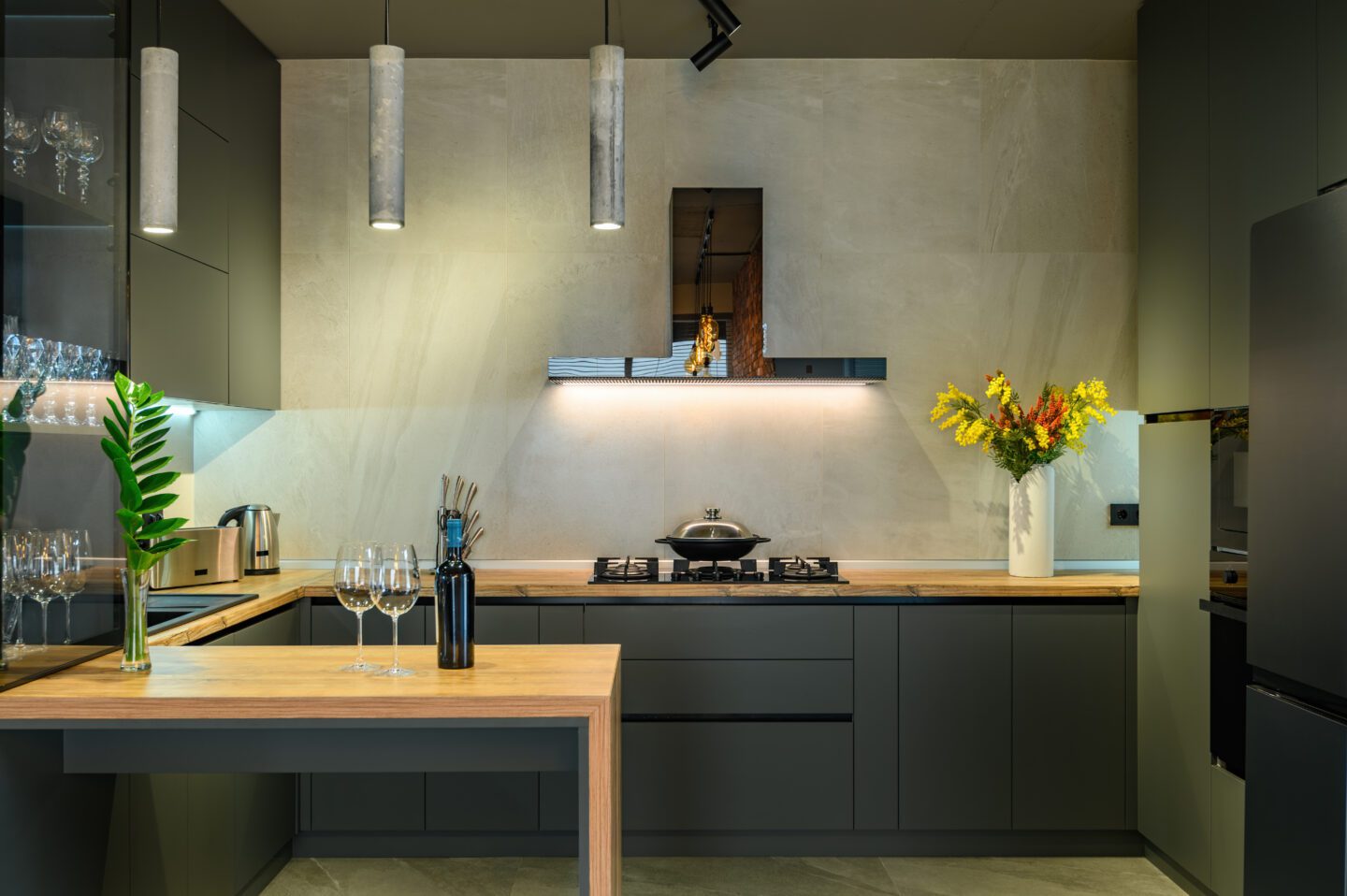
Choosing the right kitchen layout
Choosing the right kitchen layout comes down to how you move, where you prep, and where the sink, range, and fridge land. Pick a galley for narrow rooms, an L-shape for open corners, and a U-shape for big storage and short steps. Add an island only if you have clear space all around it. If the room is tight, skip the island and keep the lanes wide.

What each layout looks like
- Galley has two rows of cabinets facing each other, with a center aisle. It is a straight shooter and wastes little space.
- L-shape hugs two walls. It opens to a dining area or family room and works with or without an island.
- U-shape wraps three walls or two walls plus a peninsula. It gives lots of counter and keeps steps short.
Think of a kitchen like a pit stop. You want the driver in and out fast. The crew needs clear zones, quick moves, and no tripping over each other. A good plan makes that happen.
Flow that works, without traffic jams
The old work triangle still helps. Keep sink, range, and fridge close, but not crowded.
- Each leg of the triangle can be 4 to 9 feet.
- Total can land around 13 to 26 feet.
- Keep walkways 36 inches wide for pass through.
- Keep the cook aisle 42 inches for one cook, 48 inches for two.
Add zones so the triangle does not carry all the load
- Prep zone near the sink with big counter space and a trash pullout.
- Cooking zone near the range with tools and pans at hand.
- Cleanup zone with the dishwasher next to the sink.
- Snack zone near the fridge so kids and guests do not step into the cook lane.
Galley kitchens, when they shine
A galley is a lean machine. It fits condos and narrow homes. We often see tight galleys in older San Francisco flats near the Sunset and Richmond. Space is tight, but meals still fly out.
Pros
- Super short steps from sink to range to fridge.
- Best use of a narrow room.
- Easy to keep traffic out. People stay on one side.
Cons
- Can feel tight if the aisle is under 42 inches.
- Less room for a big gathering.
- Corner storage is not an issue, but end walls can cramp a tall fridge.
Appliance placement tips
- Put the sink on one side, range on the other, and fridge on the open end. This spreads the work.
- Aim for at least 15 inches of counter on each side of the range.
- If the fridge lands by a wall, pick a hinge that swings away from the wall. Or use a counter depth model.
When an island helps here
- A true galley rarely pairs with an island, unless a wall gets removed to open the space. Then a parallel island can act like a second run.
- If you try an island in a narrow room, you may end up with a bottleneck. Measure twice, then measure again.
L-shape kitchens, flexible and friendly
The L-shape is the easygoing cousin. It fits many homes, from San Jose ranch homes to townhomes near Highway 101. It handles a dining table or an island like a pro.
Pros
- Open sightlines to a family room.
- Good for one or two cooks.
- Works with a small or mid size island if space allows.
Cons
- Corners can be tricky to reach.
- If the legs are too long, steps grow fast.
- If the fridge sits out of reach, snack traffic crosses the cook lane.
Appliance placement tips
- Sink in the center of the longer leg sets up a strong prep zone.
- Range on the short leg with landing space both sides keeps pans off the sink area.
- Fridge near the room entry keeps grab and go folks out of the cook path.
When an island helps here
- If you can give the island 42 inches of clear space on all sides, it will sing. You can prep on the island while guests hang out on the far side.
- If space is less than 36 inches on any side, the island will feel like a coffee table in a hallway. Skip it and add a rolling cart or a peninsula.
U-shape kitchens, storage for days
A U-shape wraps you in counters and storage. It is great if you cook often and want short steps and tons of space to set trays.
Pros
- Maximum counter in a given room.
- Easy to give each zone its own side.
- Two cooks can move without bumping.
Cons
- Two inside corners need smart storage.
- If the opening is narrow, it can feel closed.
- An island may not fit unless the room is wide.
Appliance placement tips
- Place the sink in the middle of the base of the U. Put the dishwasher to the right or left side, not both.
- Range on one wing, fridge on the other wing. You now get a clean triangle.
- Leave 36 inches of counter between sink and range for prep, more if you can.
When an island helps here
- If the U is wide, you can set a small island in the center. Keep 42 inches clear around it. The island can hold a second prep sink or a drawer microwave.
- If the U is narrow, an island will cause door collisions. Draw door swings on the floor with tape first to be sure.
Where to place sink, range, and fridge
- Sink near a window or open view helps with dishes. Keep the dishwasher next to it, with 21 inches to open the door clear of the sink cabinet.
- Range should have a vent hood that actually vents out. Keep 15 inches of counter on both sides for safety.
- Fridge near an entry lets snack traffic peel off early. Keep 15 inches of landing counter on the handle side if you can.
Counter space by task
- Prep needs the most, near the sink.
- Baking needs a stretch of cool, open counter.
- Coffee needs a small zone near water and power.
- Kids snacks need a landing spot near the fridge or pantry.
When an island helps, and when it crowds
An island is like a pickup truck. Handy when you have space; not practical if you try to squeeze it into a tight room.
Add an island when
- You have 42 inches or more on all sides.
- You want a second prep spot for a helper.
- You need more drawers and a place for trash and recycle.
- You want seating that does not steal the main table.
Skip an island when
- Any aisle drops under 36 inches.
- Doors will hit each other or a person will have to move sideways.
- You already have strong counter runs on two or three sides.
Island size tips
- Start at 24 by 48 inches for a small island, bigger only if aisles stay clear.
- Overhang for seating can be 12 inches with supports. Secure it, no elbows on a weak ledge.
- Add outlets on the island ends for mixers and chargers. Keep GFCI near water.
Corner storage that works smoothly
- Lazy susan for pots and bowls.
- Blind corner pullouts that slide and pivot.
- Angle the corner cabinet to avoid deep unused zones.
- Keep tall pantry units away from corners so doors do not collide.
What we usually see in California
- Coastal fog and salt air can swell wood doors. A good finish and steady airflow help.
- Inland heat can dry seals. Keep an eye on caulk lines at sinks.
- Quakes happen. Secure tall cabinets to studs and use latches if you store heavy plates up high.
Small space tips that punch above their weight
- Use drawer bases where you can. Drawers hold more and keep items in reach.
- Go with a single large bowl sink in tight rooms. It frees counter space.
- Pick a slide in range and a slim hood to gain inches.
- Use light colors or warm woods with simple lines. The room will feel open without tricks.
Material and finish notes for California homes
- Stone or quartz counters handle hot days and cool nights without fuss.
- Good cabinet finish keeps doors from swelling near the coast.
- Tile floors clean up easy after wet days. Place a mat by the exterior door to catch grit.
- Choose pulls and knobs that fit your hand. Big hands like wider pulls, small hands like round knobs.
Safety notes without scare talk
- Keep a clear zone of 9 to 12 inches between flame and any tall side panel.
- Use anti tip brackets on ranges. It stops a pot from tipping if someone leans on the oven door.
- Place outlets so cords do not cross the cooktop.
- Add under cabinet lighting so blades meet food, not fingers.
Quick fixes when something feels off
- If the aisle feels tight, pick a counter depth fridge or trim the island by 3 inches.
- If doors collide, flip a hinge or switch a tall pantry to drawers.
- If you bump the fridge door, move the handle to the other side.
- If the triangle feels long, bring the fridge closer to the room entry.
- If guests gather in the work area, add seating on the far side of the island and keep snacks there.
- If corners have unused space, add a pullout or turn one corner into open shelves.
- If the sink is in a less-than-ideal spot, move the dishwasher, then shift the sink and add a prep sink on the island.
A short story from the field
Mike in San Mateo said, I keep bumping the fridge door and the island stool. I said, Let us tape the footprint on the floor and walk it. We cut the island by 4 inches and flipped the fridge hinge. Next week he said, I can cook tacos with my son and we do not bump into each other.
Where form meets function without fuss
- Keep lines straight, storage smart, and aisles open.
- Put tools where the task happens.
- Treat the island as a helper, not a boss.
- Plan light in layers, ceiling, task, and a soft glow under the cabinets.
FAQs
Q, Which is better, a galley, L-shape, or U-shape
A, Pick a galley for narrow rooms, an L-shape for open corners, and a U-shape if you want max counter and short steps.
Q, How wide should the aisle be
A, Aim for 42 inches for one cook and 48 inches for two. Pass through walkways can be 36 inches.
Q, Do I have room for an island
A, You need clear space all around it. If any side drops under 36 inches, skip it. Try a peninsula or a cart.
Q, Where should the sink go
A, Near the center of your prep zone. Many folks place it under a window or on the island with space on both sides.
Q, Can I put a cooktop on the island
A, Yes, if you have a real vent plan and wide aisles. Keep 12 inches of clear counter behind seating and use a raised ledge if kids sit there.
Q, What is the best spot for the fridge
A, Near the room entry so snack traffic does not cross the cook lane. Add landing space next to it.
Q, How do California weather and quakes change the plan
A, Salt air and fog can swell wood, so pick a good finish and steady airflow. Anchor tall cabinets and islands to framing for quake safety.
Q, Do I need corner cabinets with fancy gadgets
A, Not always. A simple lazy susan or deep drawers near the corner can be just as handy, and easier to reach.
Q, How do I plan lighting
A, Use ceiling cans for wash, pendants over an island, and under cabinet strips for task work. Put them on separate switches.
Plan and build with a trusted California contractor
If you want your kitchen to flow, cook fast, and look sharp, Dreamhome Remodeling & Builders can plan and build it right. We handle galley, L-shape, U-shape, and smart islands across California spaces. Call <tel:+1>415-650-2586</tel:+1> or visit https://dream-home-remodeling.com to start your plan and move from guesswork to great meals.
